
Three numbers on an S corp return look like they should be the same and are not: AAA, retained earnings, and shareholder basis.
Preparers reach for whichever one is closest to hand, and most of the time nothing bad happens, because for a company that has always been an S corp with no tax-exempt income and no accumulated earnings and profits, the three drift together closely enough that nobody notices.
Then one of those conditions fails, and suddenly a distribution is a dividend, or a shareholder gets a K-1 that says something surprising. Here is how to keep them straight.
Retained earnings is a book number
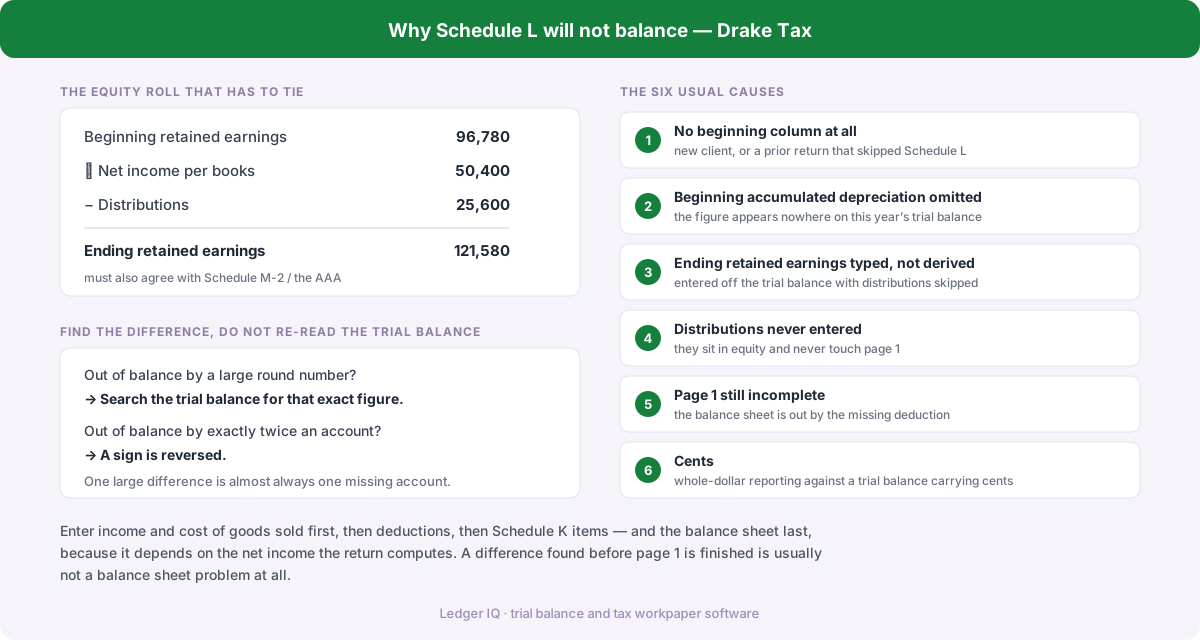
Start with the easy one. Retained earnings is accounting. It is what the books say the company has kept: prior retained earnings, plus net income per books, less distributions.
It follows book rules. It includes tax-exempt income because the books include tax-exempt income. It reflects book depreciation, not tax depreciation. It sits on Schedule L.
It has no direct tax meaning. Nobody's distribution is taxed based on retained earnings.
AAA is a tax number, and it is corporate
The Accumulated Adjustments Account tracks income the S corporation earned and has already passed through to shareholders but has not yet distributed. It lives on Schedule M-2.
Three properties worth memorizing:
It is one account for the whole company. Not per shareholder. One AAA regardless of how many owners.
It excludes tax-exempt income. This is the difference that surprises people. Municipal bond interest increases book retained earnings and increases shareholder basis, but it does not go into AAA. It goes into the Other Adjustments Account, the OAA column sitting right next to AAA on M-2. If a client holds munis or has life insurance proceeds, AAA and retained earnings part company permanently.
It can go negative from losses, but not from distributions. Losses can drive AAA below zero. Distributions cannot. Once AAA is at zero, further distributions come from somewhere else, and where they come from is the entire question.
Basis is a tax number, and it is personal
Shareholder basis determines what happens to that individual. Can they deduct the loss. Is their distribution taxable. What is their gain on sale.
It is per shareholder, it includes tax-exempt income, and it is affected by when they bought in and what they paid. Two shareholders in the same company with identical ownership percentages can have wildly different basis if one bought in later at a higher price.
AAA and basis move in similar directions and mean completely different things. AAA is about the company's undistributed S-period earnings. Basis is about one person's investment.
When the difference actually bites: accumulated E&P
Here is the scenario that turns this from bookkeeping trivia into a real tax outcome.
If the corporation was ever a C corporation, it may be carrying accumulated earnings and profits from those years. AE&P does not go away when the S election is made. It sits there.
Now the distribution ordering rules matter, and they run in this sequence:
1. Out of AAA, tax-free to the extent the shareholder has basis.
2. Out of accumulated E&P, and this part is a taxable dividend. Not a return of capital. An actual dividend, taxed as a dividend, reported on the K-1 as such.
3. Out of remaining basis, tax-free.
4. Anything beyond that is capital gain.
So a shareholder in a former C corp who takes a distribution larger than AAA gets a surprise dividend. Not because the company had a great year, but because of the order of the buckets.
For a company that has been an S corp since inception with no AE&P, step two does not exist and the whole thing collapses into a much simpler question of basis. Which is why most preparers never think about this, right up until they pick up a client that converted in 2016.
The practical checks
Was this ever a C corp? First question on any new S corp client. If yes, find out whether AE&P exists and what it is. If nobody knows, that is a project, and it needs to happen before a distribution is characterized.
Does the client have tax-exempt income? If yes, AAA and retained earnings will diverge, permanently, and the tax-exempt piece belongs in OAA. Do not "fix" the difference by forcing them together.
Is AAA being reduced by nondeductible expenses? It should be. Nondeductible expenses reduce AAA, which is one of the ways AAA and book retained earnings drift apart when book treatment differs.
Are distributions actually coded as distributions? The recurring theme in every article about S corps, because it is the recurring problem. Owner draws posted to an expense account corrupt AAA, retained earnings, and basis simultaneously, in ways that are hard to unwind two years later.
Where these numbers come from
All three trace back to the same trial balance, which is the argument for getting that right before any of this is computed.
In Ledger IQ, distributions map to the distribution line rather than landing in an expense account, so the number that drives AAA and basis is the real one. Book to tax differences post as tax journal entries with their own M-1 and M-2 offset rows, which is exactly the separation this article is about: the book column stays true to the client's financial statements, which is what retained earnings needs, while the tax adjustments are tracked separately, which is what AAA needs.
The Working Trial Balance shows both columns side by side with totals proving each foots. When retained earnings and AAA differ, you can see the specific entries causing the difference rather than staring at two numbers and hoping.
And Schedule L beginning balances can be entered as an optional check, so a retained earnings figure that stopped being right several years ago surfaces now rather than during a sale.
Ledger IQ supports Forms 1065, 1120S and 1120, with exports for Drake, Lacerte and UltraTax CS. Your first return is free, so you can try it at portal.ledgeriq.ai on a live client without a credit card.